
You are allowed to use your own car for the UK driving test. The advantages include a familiar space and controls you are used to.
But if you don’t have a car that is roadworthy, you will not be allowed to take your driving test in it.
Imagine waiting months for your driving test, and on the day, being told by the examiner that they cannot allow the test to proceed because of a problem with your car. Another test slot might be weeks or months away, and you’ll have to pay for the test again.
So, don’t get caught out – use this checklist to ensure your car follows the rules.
Remember, your car does not need dual controls.
At least two weeks before your test
Check your car:
- is taxed and has a current MOT where required – these must remain valid on the day of your test, so check the expiry dates using this webpage. However a current MOT does not guarantee that your car is still roadworthy
- is insured for taking a driving test – you shouldn’t assume your insurance covers the test, so check with your insurer first
- has no warning lights indicating a safety issue, such as an airbag warning light
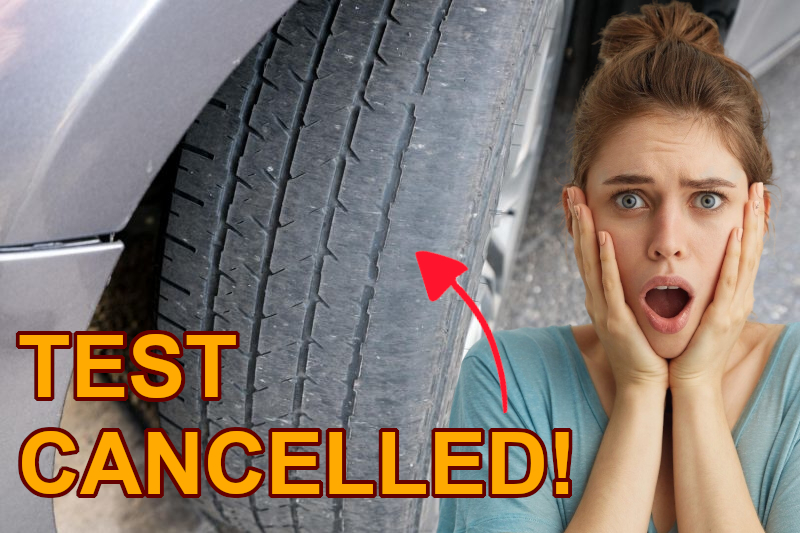
- has no tyre damage and has at least 1.6mm of tread across the central three-quarters of each tyre’s width and around its entire circumference. A space-saver tyre must not be fitted for your test
- can reach 62 mph and has an officially fitted speedometer in miles per hour
- is fitted with L-plates, clearly displayed front and rear
- has an additional interior rear-view mirror for the examiner to use. I recommend this 200mm interior mirror from Amazon
- has a passenger seatbelt and suitable head restraint; a slip-on head restraint is not acceptable.
If a dash-cam is fitted, it must only film the exterior of the car and not record cabin audio.
Note: I recommend to my learners that they replace tyres at 3mm tread depth.
You cannot take a test in a car that has been specifically identified as not suitable for the UK driving test. These cars have limited rear visibility, or other features that make them unsuitable:
- any panel van (cars without rear seats or rear side windows)
- BMW 218 convertible
- BMW Mini convertible
- Ford KA convertible
- Polestar 4
- Polestar 5
- Smart Fortwo (2-door)
- Toyota iQ
- VW Beetle convertible
If you are in any doubt whether your car is suitable, contact your driving test centre in advance of the test, particularly if your car is a convertible or coupe. (Source: https://www.gov.uk/driving-test/using-your-own-car)
The day before and on the test day
- Check the tyres for damage – if there are any cuts or bulges in the outside of the tyre, get them assessed properly as soon as possible
- Check that the brakes work and the car does not pull to one side when braking
- Clean the car inside and out – remove any loose items that may be dislodged when braking. The car must be smoke-free
- Check all the lights work
- Clean the mirrors, windscreen and other windows
- Practise the ‘show me/tell me’ questions in the car
You are allowed to use certain features your car may be equipped with, such as:
- an electronic parking brake
- hill-start assist
- cruise control (including adaptive cruise control)
- a speed limiter
- parking sensors and/or cameras
- lane assist
- blind spot monitoring
- traffic sign recognition
You are not allowed to use any self-parking or autopilot features.
During the independent driving section of the test, you will be following road signs or the examiner’s satnav (or a combination of both), and you won’t be allowed to use your own device for navigation.
The windscreen and front side windows must meet the tinting rules. Check the requirements here. If your car has rear tinted windows there is no equivalent tint limit, but excessively dark tints can still prevent the test from proceeding.
You should be checking the car regularly to keep it safe on the road. Remember “FLOWER” to help you check:
- Fuel
- Lights
- Oil
- Water (coolant and washers)
- Electrics (including battery)
- Rubber (i.e. tyres and windscreen wipers)
Taking the test in your own car may give you a sense of familiarity and help with anxiety associated with the test. Just don’t get caught out – check everything above before your test, and in plenty of time to have any problems fixed.
