
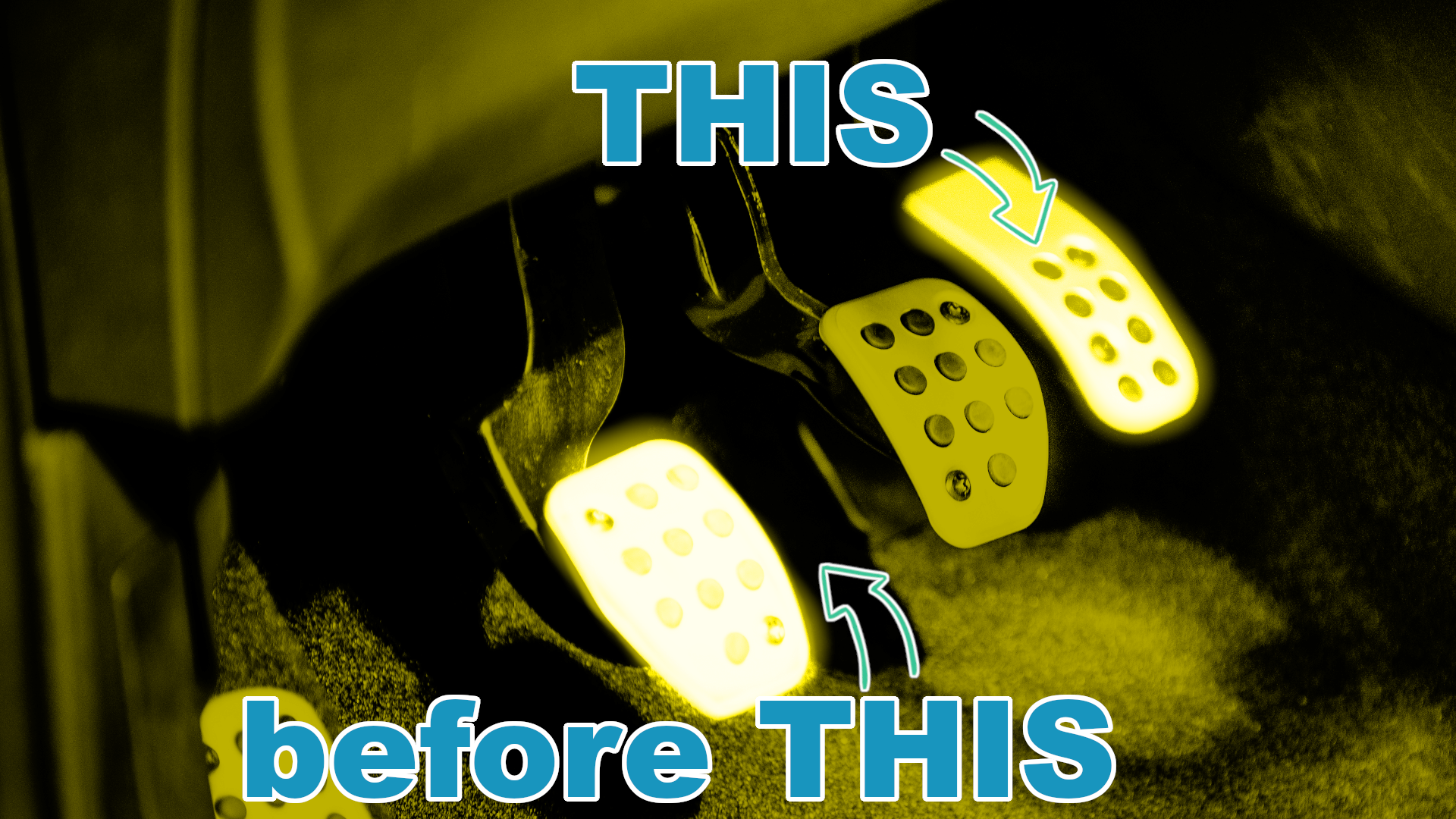
If you keep stalling your car when pulling away, this is probably why.
Most learners stall occasionally, and in many situations, that’s perfectly normal. But repeated stalling, especially when it causes panic or leaves you stuck in the middle of a junction, is not something to ignore.
If you are like most learners, you probably hate it when the car stalls. It feels embarrassing. It feels like you are not progressing. You might even start blaming yourself.
The good news? In most cases, the fix is surprisingly simple.
Let us first look at what actually causes a stall.
What Is Stalling?
In petrol and diesel cars, the engine provides power to the wheels through the gearbox. In a manual car, the clutch separates the engine from the gearbox, allowing you to gradually connect engine power to the wheels.
When you lift the clutch smoothly, the engine’s power is introduced gradually and the car moves away.
However, if the engine does not produce enough power to move the weight of the vehicle, it will struggle and eventually stop. That is a stall.
It is not usually about speed of movement. It is about lack of power at the moment the car needs it most.
What Are the Dangers of Stalling?
Stalling is more than just frustrating.
If your car stalls while moving off, you lose momentum. This can mean missing safe gaps in traffic or becoming stranded at a junction.
There is also a safety risk. When you brake normally, your brake lights warn drivers behind that you are slowing down. When a car stalls, it can stop suddenly without that same clear warning. A driver behind may not expect it, increasing the risk of a rear-end collision.
Confidence drops quickly after a stall, and hesitation often follows.
The Biting Point Misunderstanding
Most learners are taught how to find the biting point (that’s the point where the clutch plates begin to connect and the car is ready to move).
The problem is this: many learners believe driving off at the biting point alone is enough.
But consider this: you are asking the engine to move around 1,500kg of car, plus passengers, possibly on a slight incline. That requires power.
Bringing the clutch up without adding gas is very common. Often this happens because:
- You are focused entirely on finding the bite.
- Your right foot is still covering the brake.
- You are anxious about over-revving
Think of the clutch and the accelerator as partners. The clutch connects the power — but the accelerator provides it.
The gas needs to be applied first.
Try This Technique
Practise somewhere quiet and always make full observations before moving off.
- Secure the car with the handbrake.
- Gently press the accelerator so the engine note becomes slightly louder — just a small increase.
- Slowly lift the clutch to the biting point.
- If the bonnet lifts slightly or you feel the car wanting to move, you are there.
- Check all around again and release the handbrake.
- Allow the car to move. Keep your left foot still at the bite for about one car length.
- Then smoothly lift the clutch fully while adding a little more gas.
- The key is stability. The engine should sound calm and controlled — not struggling.
Timing Is Everything
You are probably not stalling because you are lifting the clutch too fast.
You are stalling because the engine does not have enough power at the exact moment the clutch connects.
If you add power before and during the biting point, the engine is prepared for the load. The car moves away smoothly, confidently and under control.
Final Thoughts – It Is Sequencing, Not Skill
Stalling does not mean you lack coordination. It does not mean you are “bad at driving.”
It usually means the timing between gas and clutch needs adjusting.
Once you understand that the accelerator must support the clutch, not follow it, everything becomes easier. Junctions feel calmer. Hill starts feel manageable. Roundabouts feel less intimidating.
Gas before bite.
Get the sequence right, and the confidence follows. If you are struggling with repeated stalling in South Warwickshire, we can work on this calmly and methodically until it clicks — because once it does, it really does stay with you for life.
